
We bond a lot of different materials in this workshop - 3D printed parts, machined aluminium, scanned-and-printed components for race bikes and road cars. No single adhesive does all of that, so we keep three Loctite products on the shelf and pick the right one for each job: EA E-30CL (clear epoxy), EA E-20HP (toughened structural epoxy) and HY 4070 (cyanoacrylate/methacrylate hybrid).
Here's how we choose between them, with the real numbers from Henkel's technical data sheets.
The quick chooser
- Bondline has to be invisible, or you're potting or casting where appearance matters - EA E-30CL. It's ultra-clear with low viscosity.
- Maximum structural strength, metal-to-metal, need peel resistance - EA E-20HP. This is the one we used to glue the CBR1000 race bike winglets ↗ together.
- Fast fixture in under 60 seconds, gap-filling up to 5 mm, joining mixed materials - HY 4070. It's a non-sag gel, so it stays where you put it.
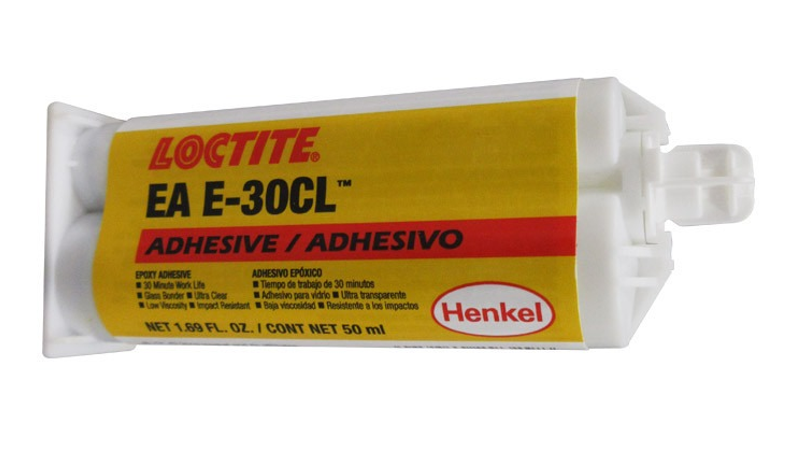
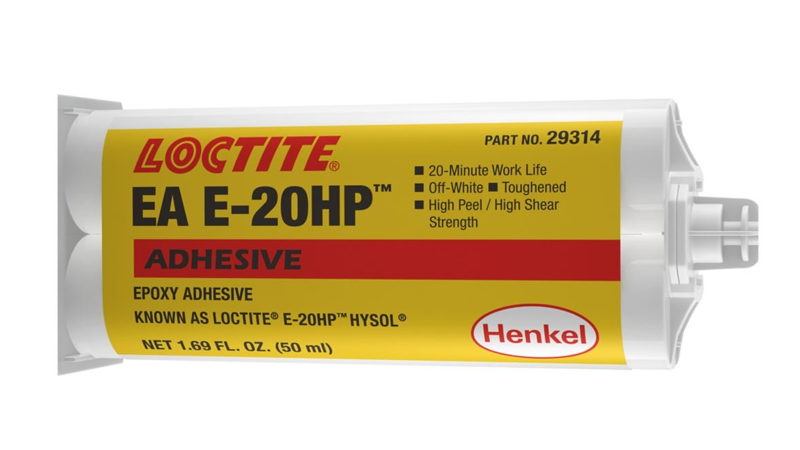
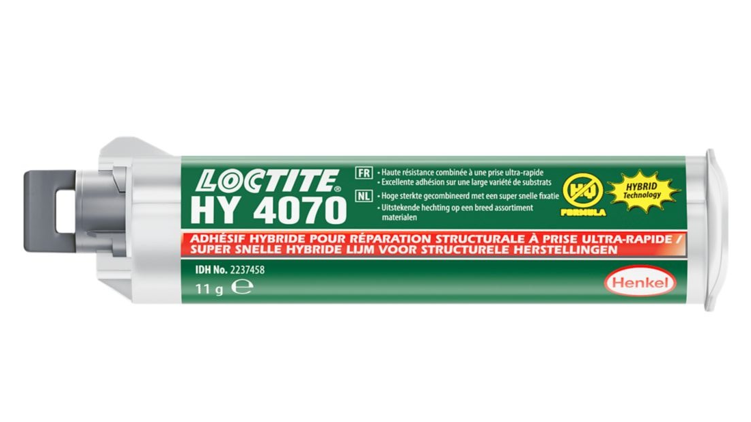
Basic spec comparison
| Spec | EA E-30CL | EA E-20HP | HY 4070 |
|---|---|---|---|
| Technology | Epoxy (amine hardener) | Epoxy (toughened) | Cyanoacrylate / methacrylate hybrid |
| Appearance (mixed) | Clear | Off-white | Transparent cloudy gel |
| Working time / nozzle life @ 23°C | 30 min | 20 min | 4-5 min gel time |
| Fixture time | 160 min tack free | 40 min tack free | <60 s on aluminium (0.05 mm gap) |
| Full cure | 7 days @ 22°C | 5 days @ 23°C | 24 h to service load |
| Gap fill | Thin bondline | 0.1-0.2 mm typical | Up to 5 mm |
| Best substrates | Glass, optical fibres, ceramics, metals | Plastics, metals, concrete | Plastics, rubbers, metals (broadest) |
Figures from official Henkel technical data sheets (EA E-30CL Jan 2018, EA E-20HP May 2023, HY 4070 Jul 2017 editions). For the full substrates list, check out their individual technical data sheets listed below.
Where we actually use each one
EA E-20HP is our go-to for structural metal and mixed-material bonds where strength and peel resistance matter more than looks. Real example: the CBR1000 race bike winglets ↗ we built for the race bikes are glued with it. EA E-30CL earns its spot when the bondline shows. Clear, low viscosity, and it cures hard - great for optical work, clear parts, and potting electronics. HY 4070 is the fast one. When we need a part held in position in under a minute, or we're bridging a gap up to 5 mm on mixed materials, this is what comes off the shelf.A few gotchas worth knowing
- Both epoxies need tight-fitting joints. If your gap is bigger than a couple of tenths, HY 4070 is the only one of the three that genuinely gap-fills.
- HY 4070 doesn't love heat or fuel.
Download the official data sheets
Full technical data straight from Henkel, as used for the figures above:
- LOCTITE EA E-30CL technical data sheet (PDF)↗
- LOCTITE EA E-20HP technical data sheet (PDF)↗
- LOCTITE HY 4070 technical data sheet (PDF)↗
Links to the official Henkel NZ product pages, where the data sheets and current revision live.
Frequently asked questions
Common questions about choosing between these adhesives.
For lap shear on aluminium, EA E-20HP wins at 28.2 N/mm², ahead of EA E-30CL (~20+) and HY 4070 (15-20). On steel the hybrid HY 4070 edges ahead at 25 N/mm² with grit blasting - but it drops off badly with heat and fuel exposure, so E-20HP is our structural metal default.
HY 4070 fixtures in under 60 seconds on aluminium and reaches service load in 24 hours. EA E-20HP takes 40 minutes to tack free and 5 days for full cure. EA E-30CL is the slowest - 160 minutes tack free, 7 days full cure.
No - never mix cured or partially cured material back into the cartridge, and never mix ratios by eye. All three products need their stated mix ratio: 2:1 by volume for both epoxies, 10:1 A:B for HY 4070.